We have collaborated with the Sheffield Clinical Trials Research Unit to support them with the capture and management of data for clinical studies. Together we have developed Prospect as a secure online platform to collect and manage clinical study data. Prospect supports clinical study staff to collect, validate, and report on their study data.

Prospect is designed to support staff at every stage of their clinical study. Study managers have a large range of form design options available when constructing the case report forms (CRFs), with consultation and support from epiGenesys. Data entry staff are guided through the data collection process with forms and fields only appearing when required. Data management staff have a wide range of reports for managing the data, with the option to add custom study-specific reports to solve any unique problems. They are supported in maintaining data quality through both point of entry validations preventing incorrect data, along with post entry data validation to highlight potentially incorrect data to site staff for correction.

Prospect is fully web-based and centrally hosted, meaning that there is no need for installation of software at participating study sites; all that is needed is access to the internet through a modern web browser.
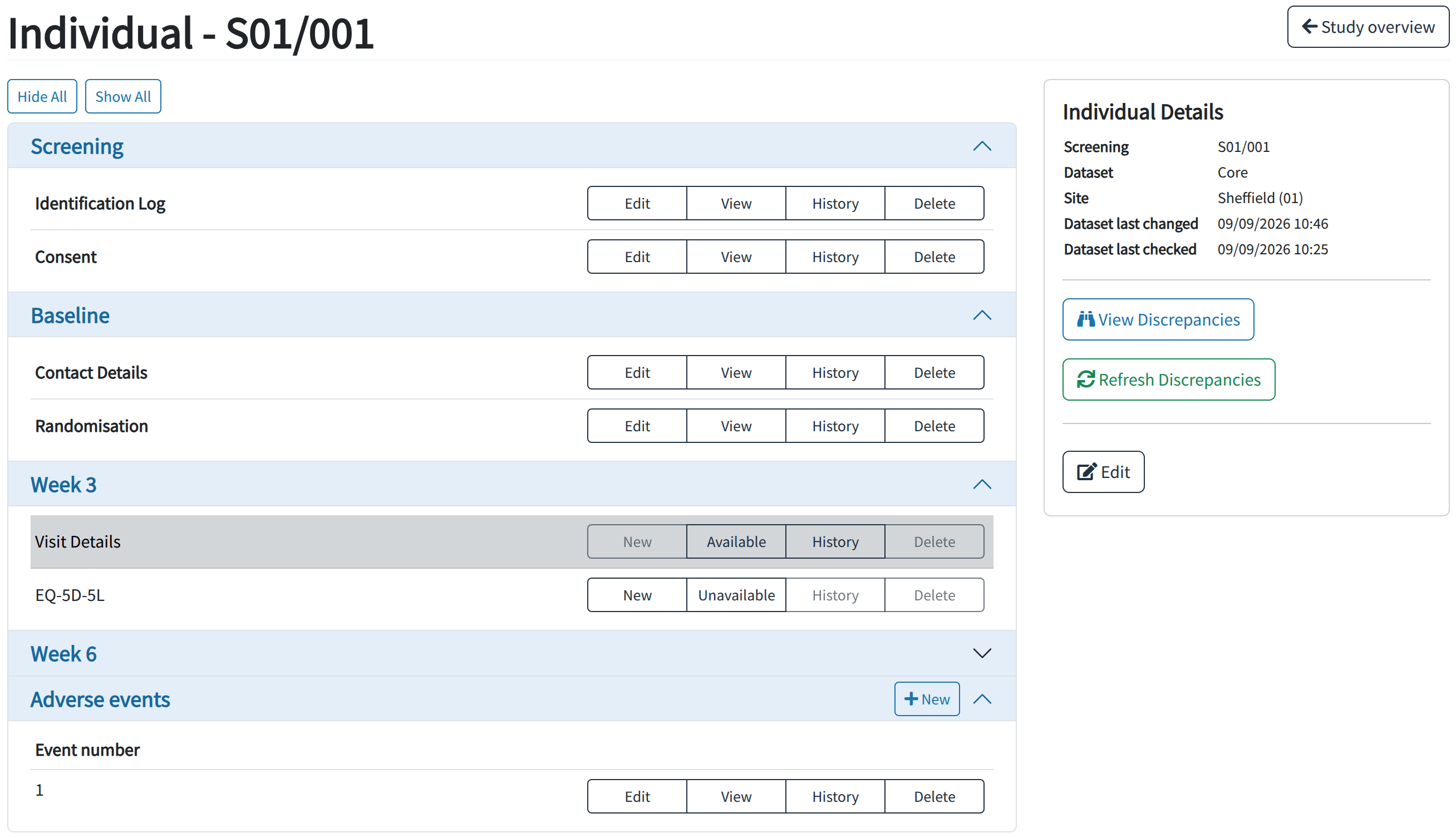


Clinical Trials Databases (Prospect) - Data Entry Overview

Our EDC allows data entry into forms grouped by event that are relevant at that point in time.
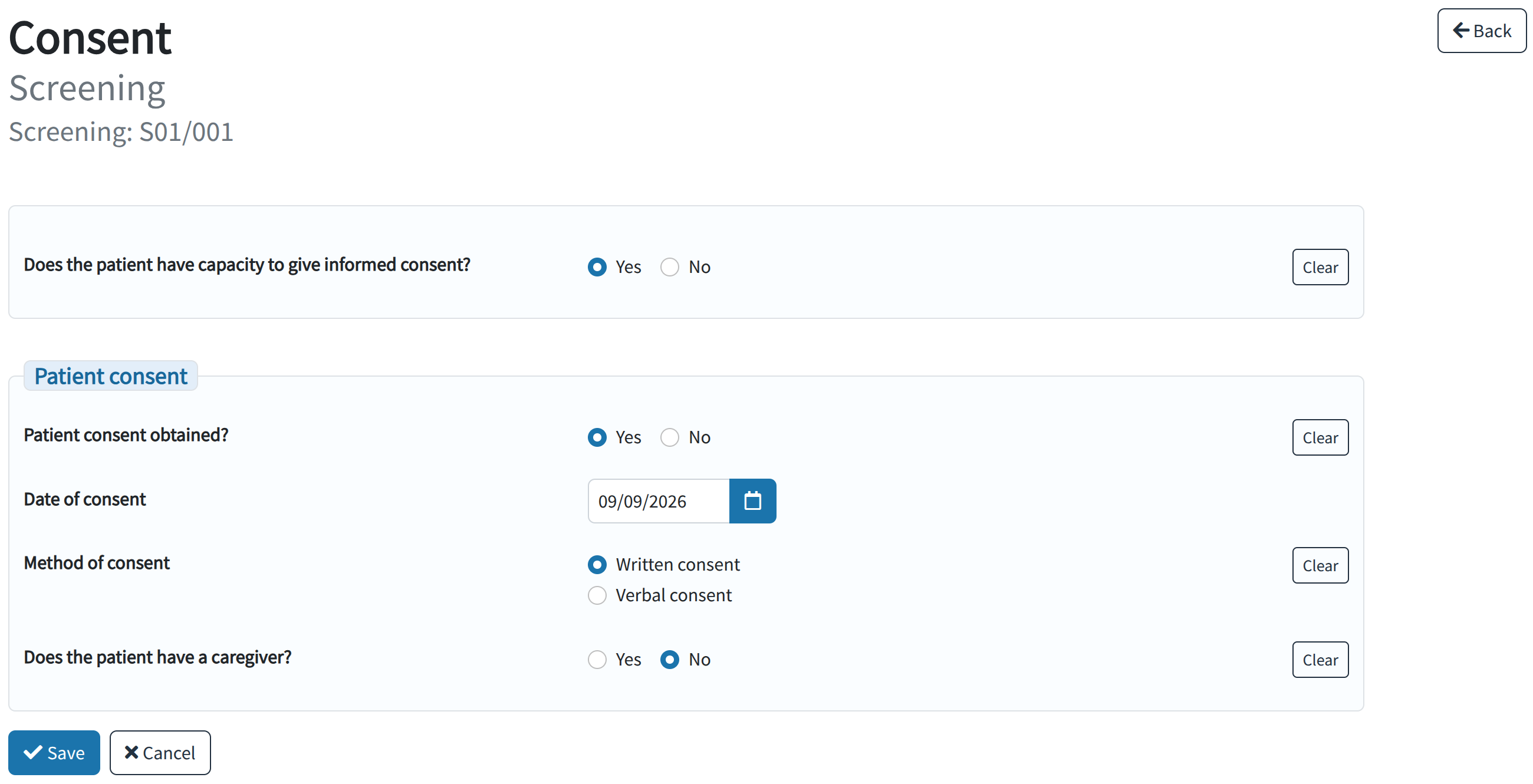
Clinical Trials Databases (Prospect) - Entering Study Data

We work alongside the study team to produce eCRFs with flexible inputs that only show relevant questions.
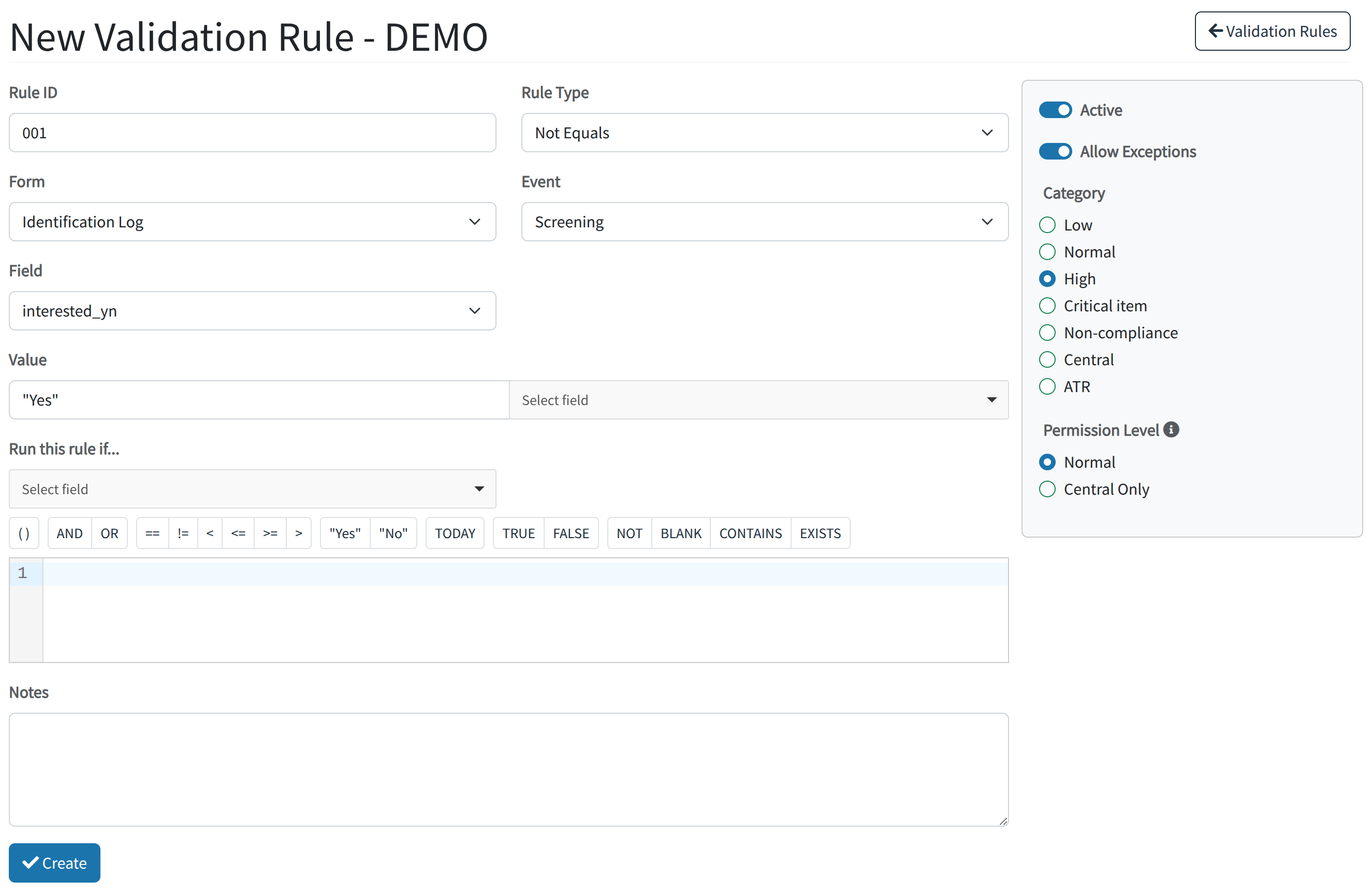
Clinical Trials Databases (Prospect) - Post Entry Validation Rules

Highly customisable validation rules can be created that are automatically run against the study data.

Supported Setup

  • Supported eCRF design: Working alongside the Sheffield Clinical Trials Research Unit we have years of experience adapting CRFs for Prospect.
  • Hosted for you: We host and maintain the system for you, with all data stored and processed within the UK - no technical knowledge is required.

Data Capture

  • Online data capture: Capture data for individuals belonging to different sites. Study data is split up into events, each of which can have multiple forms.
  • Support for multiple datasets: Capture data for multiple datasets in the same study. For example, you could capture details about parents and children separately, with different forms available to each.
  • Form privacy levels: We support four levels of form privacy (clinical, central, personal and sensitive), allowing fine-grained access to study data.
  • Form and field dependencies: Staff are only shown relevant forms and fields through the usage of customisable form and field dependencies. These make use of a flexible and powerful grammar system that supports complex nested criteria to show and hide fields.
  • Automatic calculations: We support fully bespoke, automatically calculated fields. For example, you could add a calculated field to a questionnaire that automatically calculates the score as an outcome measure.
  • Bulk data entry: Custom screens can be created as needed, to represent forms that capture data for more than one data subject (screening logs, group therapy attendance logs, etc) or used for integration with other tools (exports from questionnaire systems, medical device data, etc).

Quality Assurance

  • Full audit trail and form history: All changes to form data (who, why, when) are captured and can be viewed in the history of the form. Changes to form data require a reason to be provided.
  • Point of entry validation: Avoid invalid data through the use of a comprehensive suite of customisable validations.
  • Post entry validation: Study managers can define and edit validation rules that are compared against the data regularly. Any issues are highlighted as discrepancies for research staff to address.
  • Tracked and managed discrepancies: All discrepancies highlighted by the validation tool are tracked. Research staff can mark discrepancies as in-progress.
  • Bespoke reports: We work closely with your study and data management teams to create bespoke reports to process and visualise your data.

Access and Security

  • Access control: Access to the system is restricted by username and password, with each study team member and member of site staff having their own account.
  • Roles and permissions: Authorised roles are study-specific and fully customisable. Each role combines study-wide and site-specific permissions, as well as specifying available reports.
  • Two factor authentication: Users with administrative permissions are required to use two factor authentication to ensure the security of their account.

If you would like to ask a question about our Clinical Trials Databases (Prospect) or request a demo, please contact us and a member of our team will be happy to help.